A party game I built grew into a game hub played across 41 countries.
Back in June 2026, my family got together for a wedding in Kerala. Like every family gathering, someone eventually suggested we play the viral Impostor Dance Challenge.
We tried few apps expecting to start within minutes. Instead, we spent the next twenty minutes trying to make one of them work. Wanted to make everyone download the app. The free playlists were tiny, rooms were surprisingly difficult to join, and the overall experience felt clunky. The songs we actually wanted were either missing or locked behind a paywall. It felt like we were fighting the product before we could even start playing.
Around the same time, I was spending a lot of time with Claude Code, using it to collaborate my dev team on frontend work and bring some of my own product ideas to life.
Making It Work
I knew the fun of the Impostor Dance Challenge comes from instantly recognising the song. Replace trending movie tracks with random free music, and the whole experience falls apart. The mechanics weren’t difficult, the real challenge was the music, and whether I could source it for free. After a bit of research, and a conversation with ChatGPT. I found that some music platforms expose 30-second preview clips through their APIs. And the project was on.
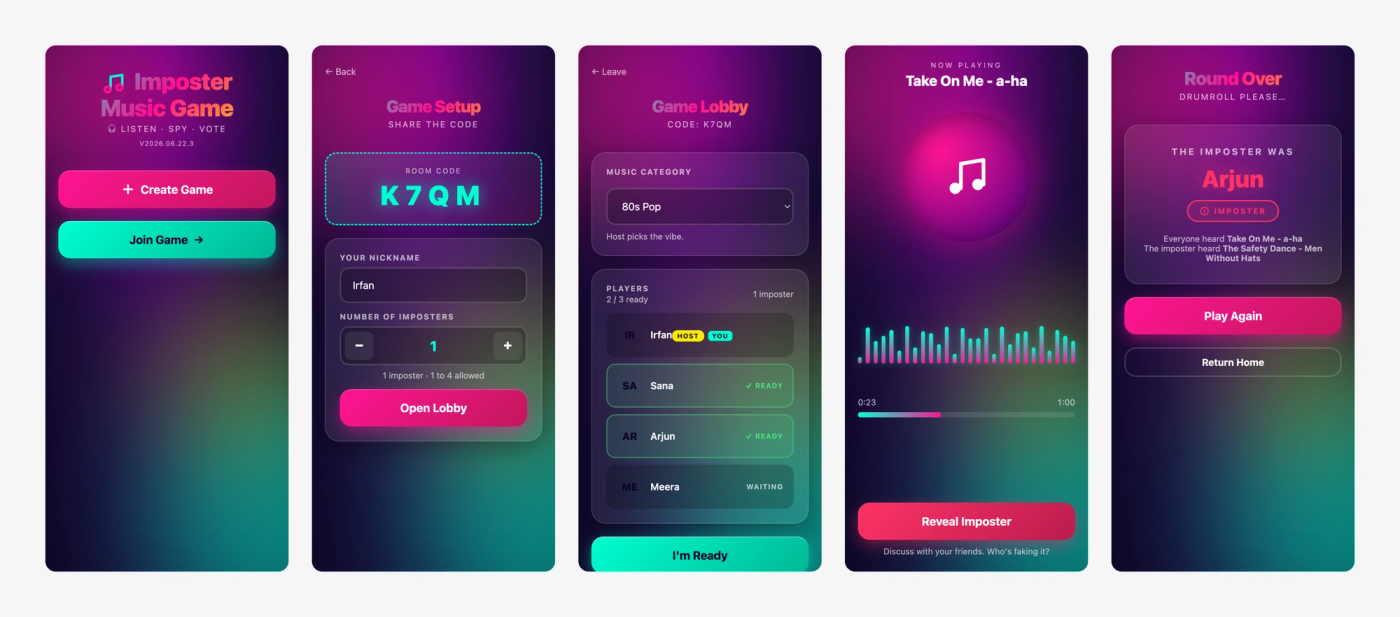
It took roughly three hours, and my family was already playing. We had solved our own problem, everyone enjoyed it, and that felt like the end of the story. But it turned out to be the beginning instead.
Once everyone had played a few rounds, the response was consistent: “You should put this online.” So I did.
Improving overall game experience
The reason I decided to put it online was that I felt we could offer much more than the current apps did, while delivering a significantly better experience with far less friction. I was confident that once people landed here, they’d want to stay.
The game itself is simple. Most of the effort went into making every part of the experience feel seamless, intuitive, and effortless to play.
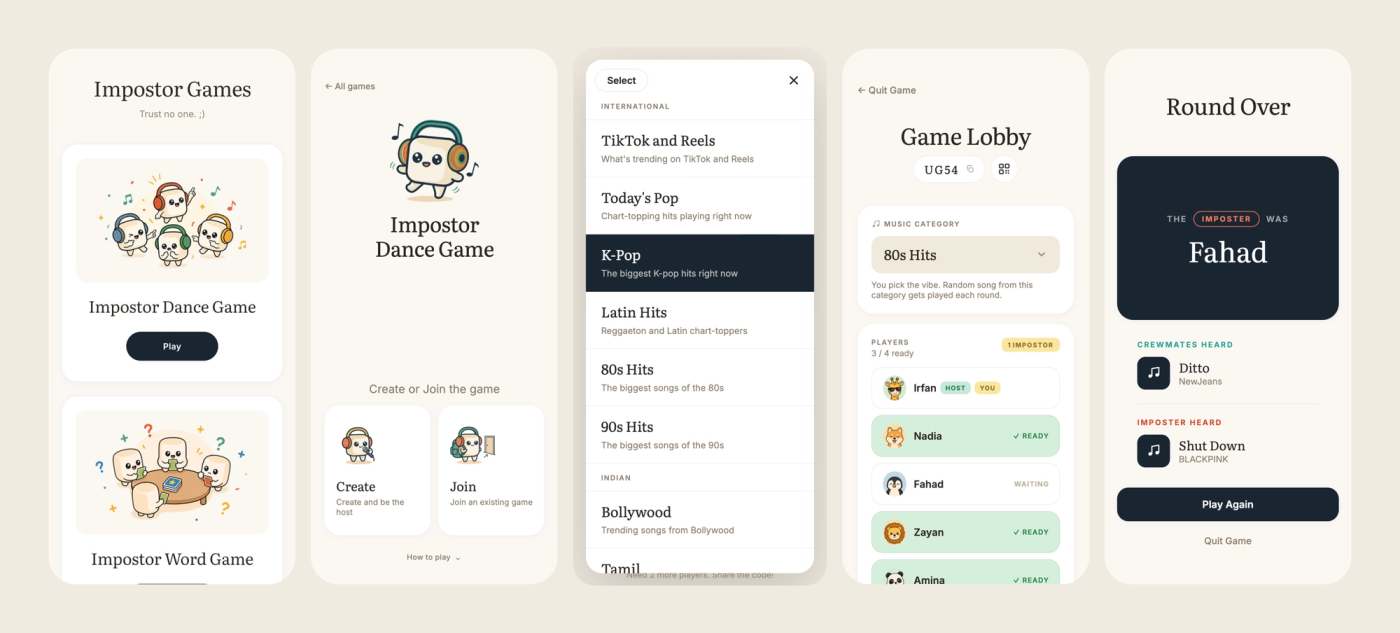
What made it feel meaningfully better came down to a few deliberate choices.
No app download.
Every similar game I found lives inside an app. Asking ten people at a party to install something is enough to lose half the room. A web link that opens instantly felt like the better experience.
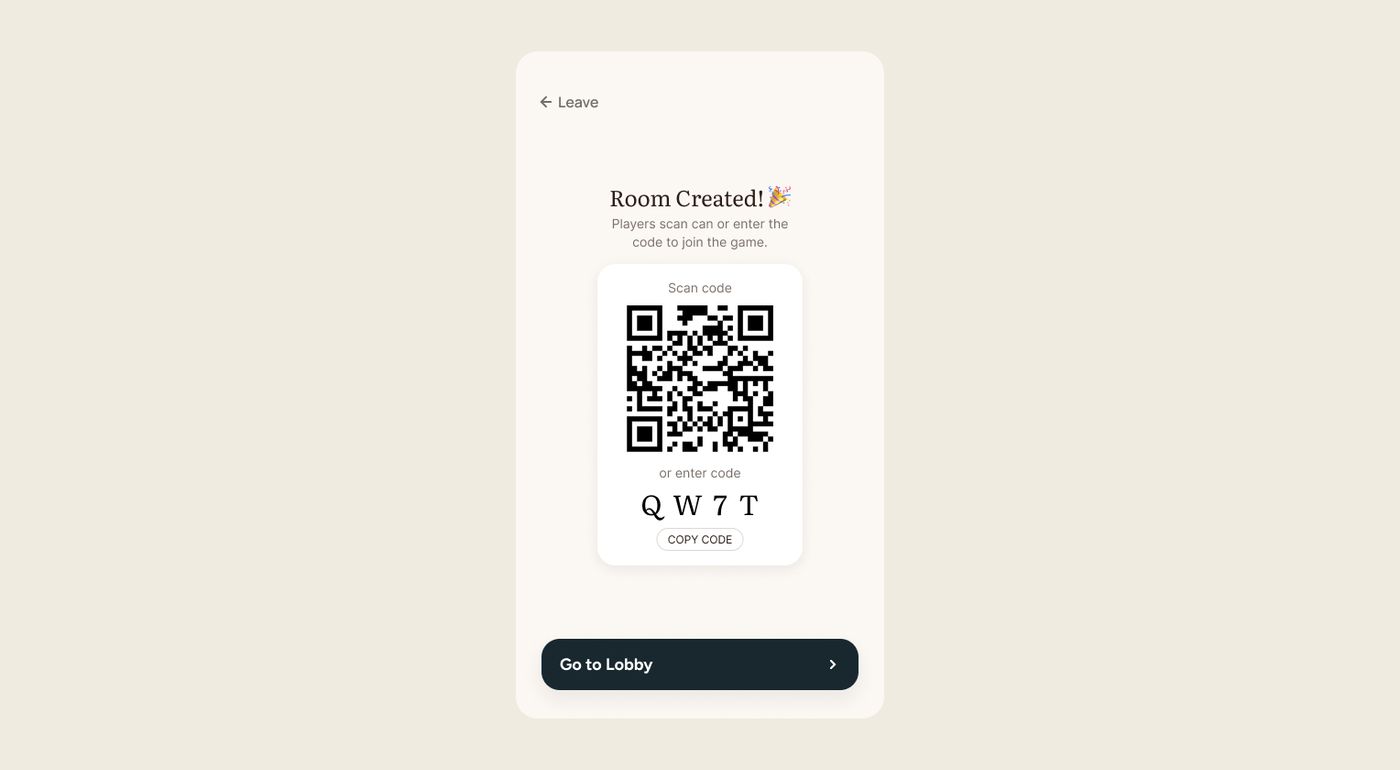
Join with a QR code.
The host creates a room, everyone scans the QR code, and they're in. No typing room codes. No explaining where to tap next.
Keeping it lightweight.
Instead of bundling songs into the game, I used Apple's 30-second MusicKit previews. The game streams the song preview when it's needed, so the experience stays lightweight while adding new songs is as simple as updating a playlist.
Designing a Cohesive Identity
One principle guided the work was creating a recognizable identity across the platform. I built a cohesive design system with a consistent color palette, typography, and a small set of expressive characters. Carrying these elements across avatars, prompts, and UI created familiarity from one game to the next.

Beyond visual consistency, this made the platform feel more intentional and trustworthy. In a category where many party games feel disposable, I wanted these small design decisions to add up to something more valuable: a brand people could instantly recognise.
Tiny details that make the experience feel fun
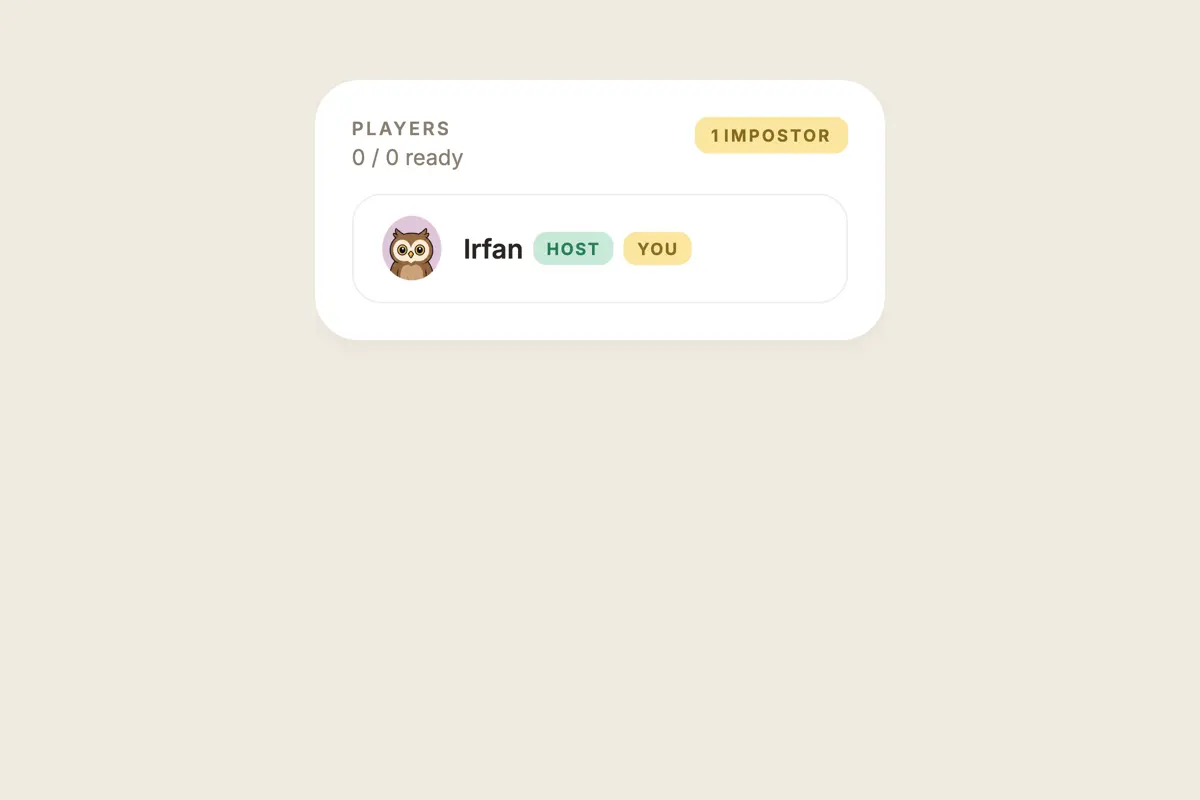
Random animal avatars, a subtle micro interactions when someone joins, small celebratory moments here and there. Nothing big on their own, but together they make the experience feel a lot more polished and enjoyable.
Naming the Game
Building the game had been easier than naming it.
The obvious choice was Impostor Dance Challenge, but I wasn't convinced. It was a trend, and trends fade. I also knew that if I ever wanted to build more games, I'd outgrow the name almost immediately.
I wanted something broader, something people could discover through search, but that also left room to grow beyond a single game.That's how ImpostorGames.com came about.
Even though the domain was ImpostorGames.com, the initial SEO focus was still entirely around Impostor Dance Challenge. The broader positioning was something I planned to lean into later, once the product had traction and a wider audience.
Looking back, that decision shaped the product more than I realised at the time. Naming it after the idea instead of the feature gave me permission to keep experimenting.
Validating the Core Experience
Before thinking about growth, I wanted to answer a much simpler question.
Would people outside my family enjoy this?
To validate the experience, I started sharing the game with a broader audience through social channels.
At that stage, I wasn’t trying to drive traffic or “bring people to the platform.” I was simply testing whether the experience itself was enjoyable. What mattered most was how people behaved after they arrived.
I added a few analytics to track the signals I believed would indicate the game's success.
- Rounds completed
- Countries of players
- Session length
- Songs played
- Returning players
The visitor count was tiny. But one metric immediately stood out.
People weren’t playing a single round and leaving. Many sessions lasted thirty or forty rounds. That was enough to confirm the core experience was working, the people who found it wanted to keep playing.
The First Traffic Spike
A week later, my cousin posted a reel featuring the game. Nothing polished. Just friends playing.
The following day, visits jumped from a few hundred to well over three thousand, and more than 1,200 rounds were played in a single day. That was the first time I realised people outside my own circle were genuinely enjoying something I had built.
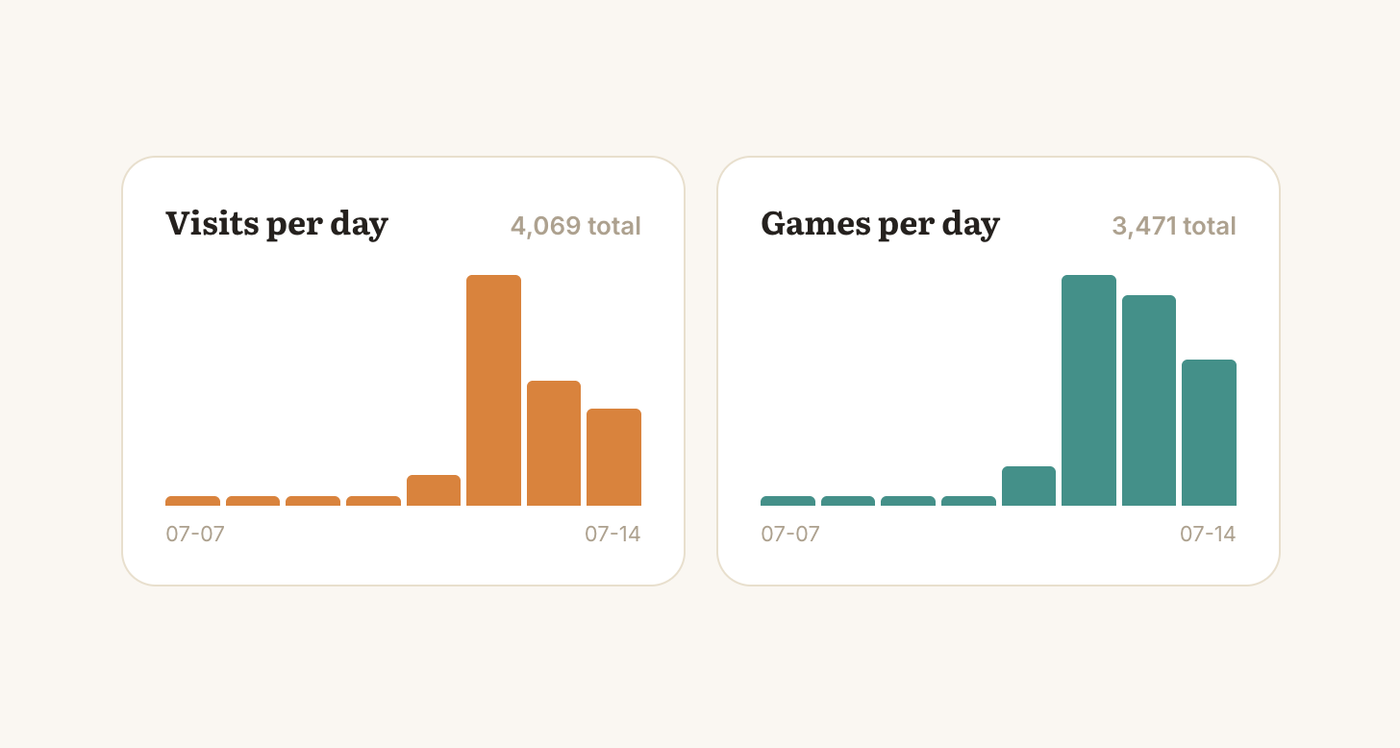
It also gave me something far more valuable than traffic. It gave me feedback at scale.
Fixing Early Issues
Most of those early players came from India.
The analytics quickly highlighted two issues. Some songs occasionally failed to load. And popular playlists started repeating too early.
Neither problem had shown up while testing with friends. They only became obvious once hundreds of people started playing. So instead of rushing into new features, I focused on stabilising what was already there.
I fixed unreliable song loading, cleaned up and re-verified the regional playlists using Claude before publishing them again, and updated the playlist logic so songs wouldn’t repeat within the same room until every available track had been played once.
None of these changes were visible as new features. But together they made the game feel noticeably more consistent and enjoyable.
Designing for Different Audiences
As more players started arriving from outside India, another challenge became obvious. The regional playlists that worked so well for Indian audiences weren't necessarily meaningful to everyone else. Initially, I tried expanding the music catalogue.
Eventually I realised that wasn't really the right solution. Instead of deciding what people should listen to, it made more sense to let them decide themselves.
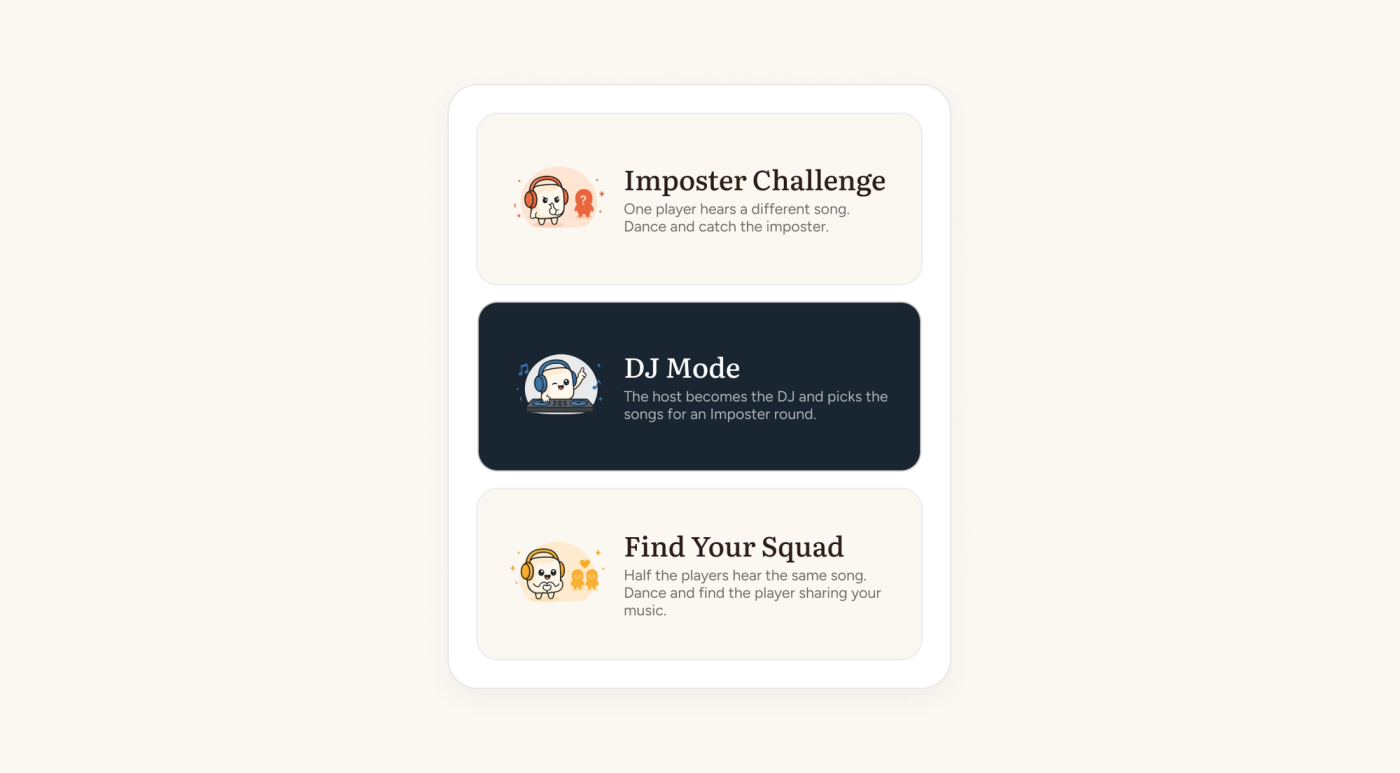
That led to custom song groups. Then DJ Mode, allowing hosts to add their own playlists.
Later, players could create and save their own song collections for future games. Rather than trying to build one playlist for everyone, the platform became flexible enough for every group to make the experience their own.
The Next Question
I also knew the sudden spike wasn't a sustainable business. It was simply a viral moment.The more interesting question was whether people would come back if there was more to play.
The next experiment was the Impostor Word Game, also known as Undercover. Everyone receives the same secret word except one player, who only gets a vague hint. Players take turns giving one-word clues while trying to identify the impostor before the impostor figures out the actual word.
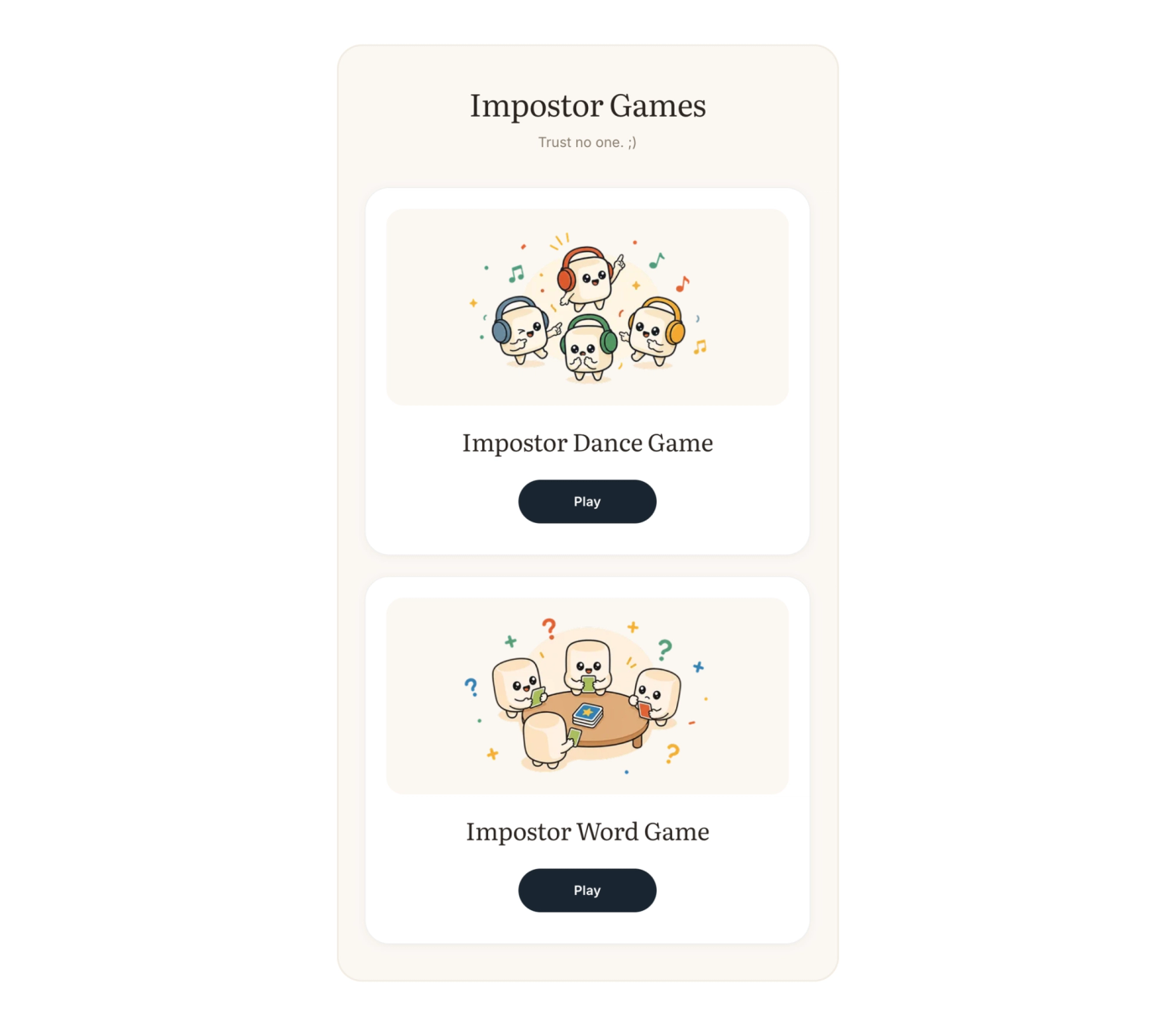
Until then, most people were landing directly on the Dance Game. So I redesigned the landing experience into a simple game hub, where users could immediately see two options instead of being funnelled into a single game.
I launched Undercover with only a handful of categories. I expected it to complement the Dance Game. Instead, it quickly reached almost half its usage, and on some days even overtook it.
Beyond Core Game
I also started experimenting with entirely new ways for groups to interact. One example was Find Your Squad, a lightweight social mode designed to explore whether players enjoyed experiences beyond the traditional impostor format.
Not every experiment became a permanent part of the platform, but that wasn't really the point. Each one helped me understand how different groups preferred to play and influenced what I built next.
Optimising for Discovery
Search Became the Growth Channel. Around the same time, I noticed another shift. More visitors were arriving through Google and ChatGPT instead of Instagram.
The SEO work started to pay off. The Dance Game had relatively little competition online, so it began ranking well for searches around the Impostor Dance Challenge. Over time, many of those queries started surfacing ImpostorGames.com as one of the first results. The same pattern showed up in ChatGPT as well, where prompts about the game often pointed users back to the site.
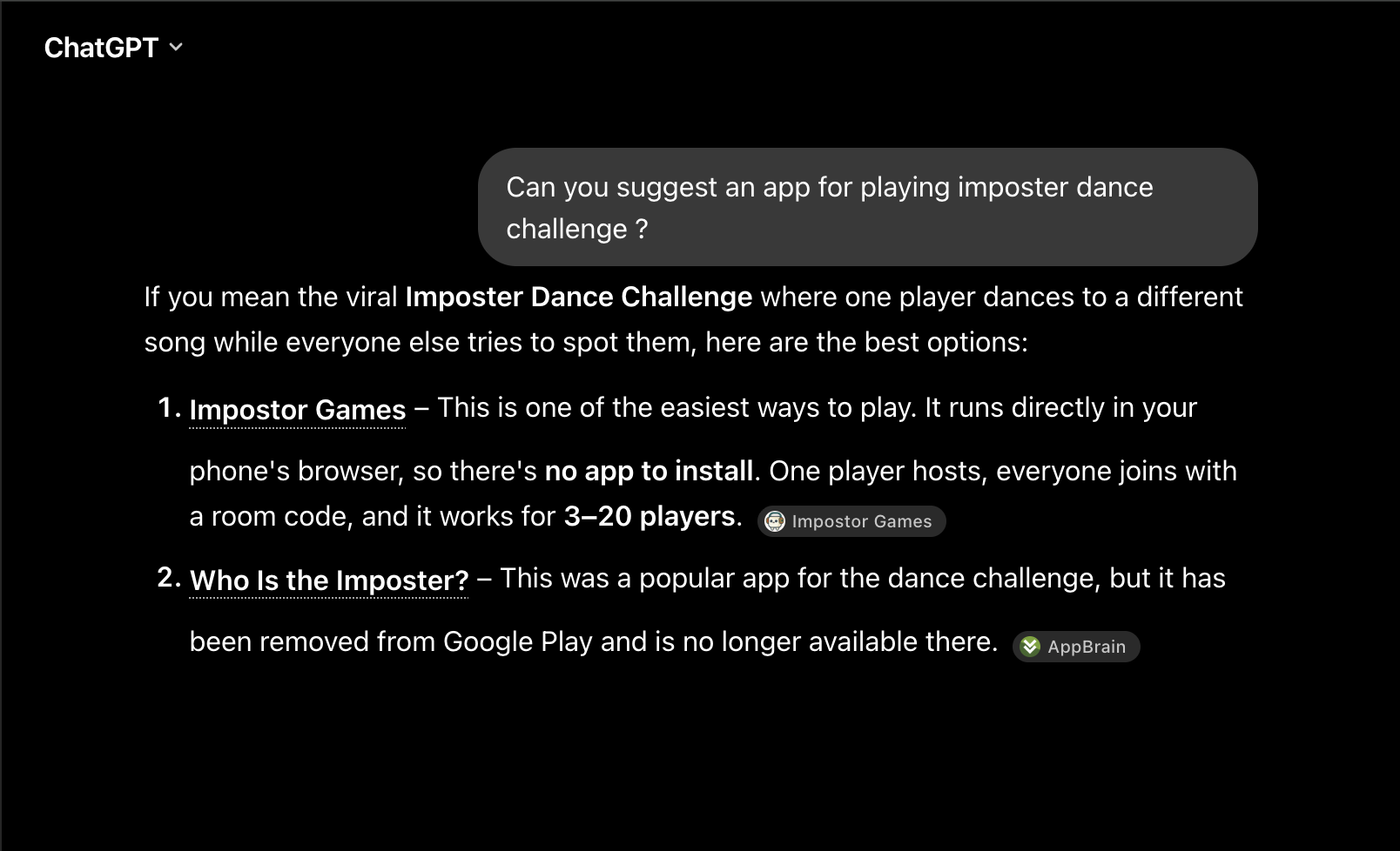
Today, the Dance Game brings in most first-time visitors, and naturally introduces them to the rest of the platform.
From Local Rooms to Shared Screens
I noticed another game trending called Impostor Artist. Everyone draws the same secret word, except the impostor, who only receives a vague hint. Instead of separate canvases, everyone contributes to a single shared drawing using different colours, before voting directly on that canvas.
Until this point, every game I had built assumed people were physically together in the same room. I wanted to explore whether the same idea could work online, especially as I started seeing players join from completely different countries. So I brought the drawing canvas directly into the game.
With a shared online canvas, the dynamic changes. The game itself becomes the social space. Instead of supporting offline interaction, it now creates the interaction inside the screen, allowing people across the world to participate in the same moment.
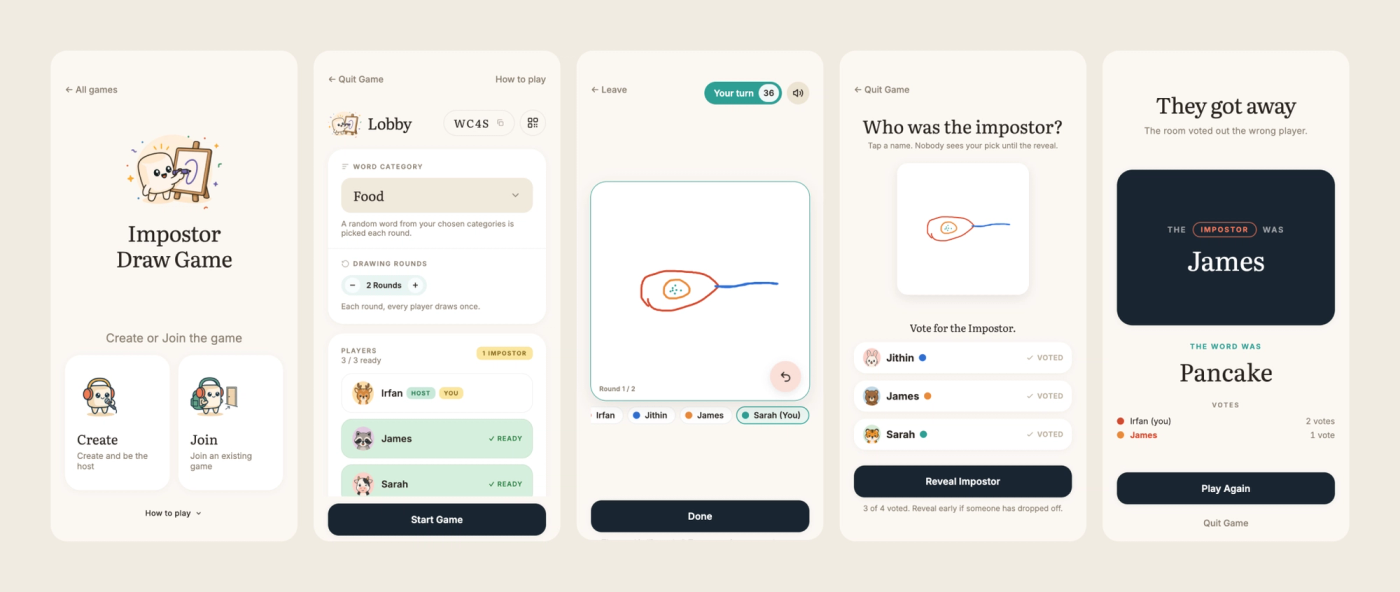
That shift gave me confidence to introduce mechanics like voting and progression more directly, without worrying about breaking the flow. The engagement reflected that players consistently completed more rounds than expected, and the audience itself had clearly expanded beyond local groups into a global player base.
What the Numbers Look Like Today
At the time of writing:
- More than 13,600 visits
- Players from 81 countries
- Over 10,000 rounds played
- Active gameplay across 41 countries
India still accounts for most of the traffic, which feels fitting since that's where the first wave of players discovered the game through Instagram Reels.
But my favourite part is the long tail.
Groups in multiple countries have played 50+ of rounds. Players keep returning from North Macedonia, Bosnia, Tunisia, Mexico, South Africa, Germany, Australia, and dozens of other countries I never expected to reach.
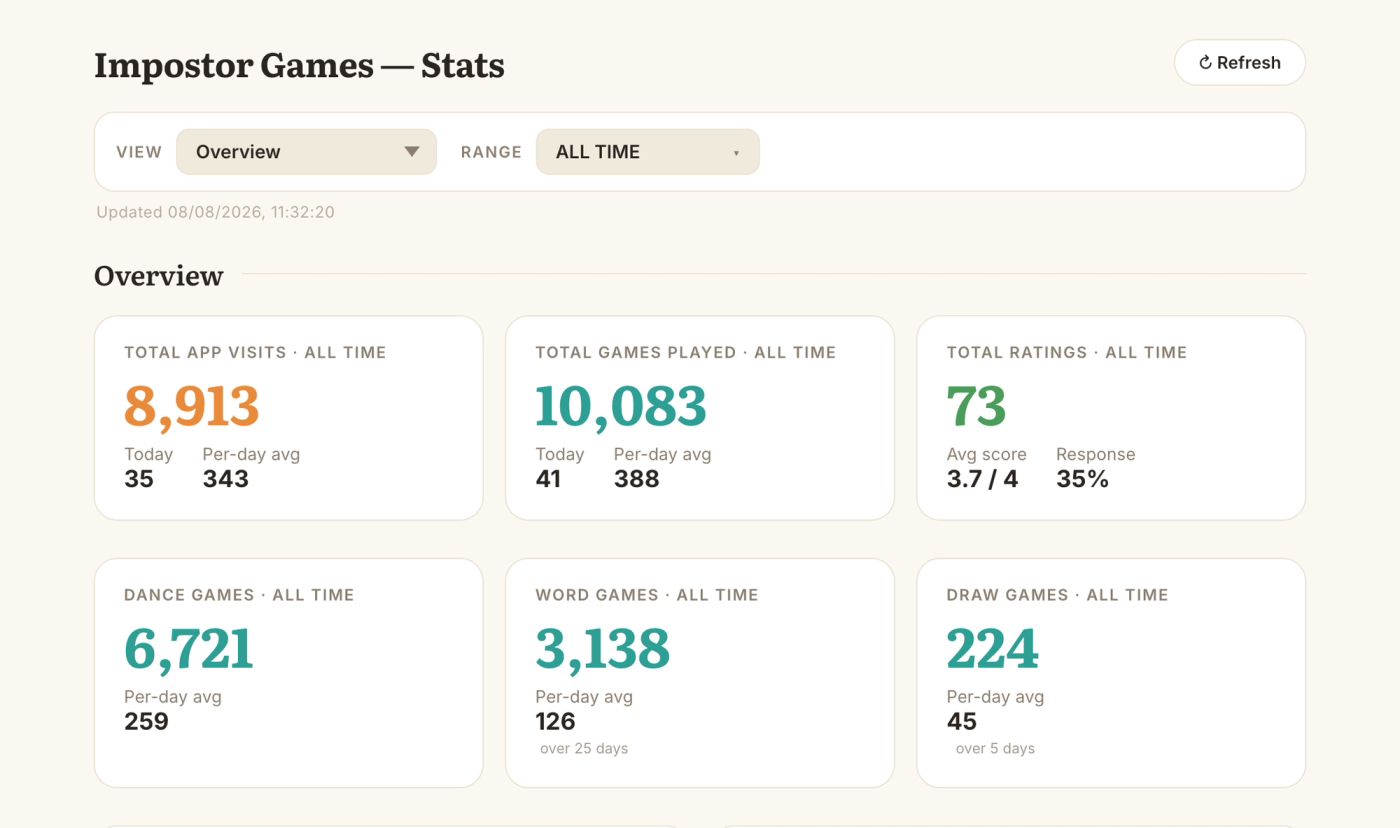
After forty-two days, the games had also received sixty-five player ratings averaging 3.7 out of 4.
For something that started as a three-hour build for my family, that's more than enough motivation to keep building.
What's Next
The product still feels like it's finding its shape.
Some ideas come from watching how people play. Others come from where I think the product could go next. The interesting part is bringing those two together.
The focus now is making Impostor Games feel more like a platform for party games. That means new game modes, AI-assisted game creation, richer host controls, better online multiplayer experiences, and eventually a monetisation model that adds value without getting in the way of gameplay.
The roadmap isn't fixed. Every release teaches me something new, and AI has made that build–measure–learn loop faster than ever.
Looking back, it's still funny that all of this started because my family couldn't find the right playlist for a wedding game.